Offers
 Account
 Menu
Menu Favourite
 Basket



 Need Optical Advice?












 Updated on:
03 June, 2026
Updated on:
03 June, 2026



 Copy Link



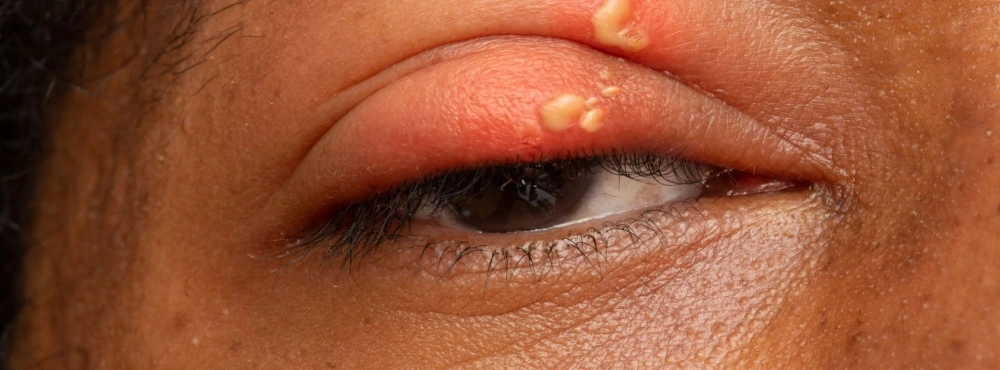
Eye herpes, also known as ocular herpes or herpetic eye disease occurs when herpes virus reaches the eye, most commonly either by self-transmission or reactivation of a dormant virus in the nervous system, travelling through the facial nerves to the eye. It can affect different parts of the eye. It can lead to serious eye complications, making it important to recognise the early signs and get prompt treatment to help protect your vision and reduce the risk of recurring infections. Read through our comprehensive guide on herpes eye infection and stay informed.
- Causes and types of eye herpes
- What may trigger eye herpes?
- Ocular herpes symptoms
- How is ocular herpes diagnosed?
- Eye herpes treatment
- Can eye herpes affect vision?
- How to reduce the risk of flare-ups?
- Frequently asked questions
Causes and types of eye herpes
The two main types of viruses that cause eye herpes are herpes simplex virus (HSV) and varicella zoster virus (VZV), which are responsible for these two primary herpetic infections:
1. Herpes simplex eye infection
Caused predominantly by HSV-1, herpes simplex eye infection is the most common type of ocular herpes. It affects your cornea (the clear front surface of the eye), eyelids, conjunctiva (the transparent membrane lining the inner eyelids) and retina (the layer of tissue at the back of your eye). This infection can be further classified into:
- Herpes simplex keratitis: It is one of the leading causes of corneal blindness worldwide and can lead to corneal ulcers, scarring, vision loss and chronic inflammation.
- Herpes simplex uveitis: This infection causes inflammation of the uvea (the middle layer of the eye), which often results in glaucoma or cataracts.
- Herpes simplex retinitis: This is a rare type that causes inflammation of the retina, leading to permanent retinal damage in absence of immediate medical intervention.
2. Herpes zoster ophthalmicus
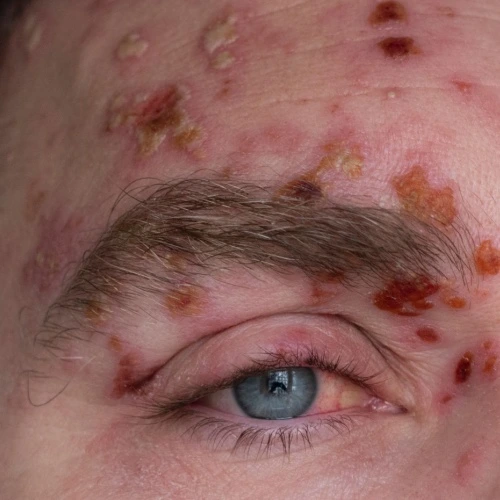
This type occurs when the shingles virus (VZV) affects the eye area and forehead. It is associated with painful skin rashes and can lead to serious inflammation inside the eye. Prompt herpes zoster ophthalmicus treatment is important to reduce inflammation and long-term nerve damage.
What may trigger eye herpes?
The main cause of eye herpes is often viral reactivation rather than a completely new infection. Not everyone with the herpes simplex virus will develop a herpes eye infection, but recurrent flare-ups are possible in some individuals. After an initial herpes infection, the virus can remain dormant in the nerves and reactivate later due to triggers such as:
- Stress
- Fever
- Fatigue
- Excessive sunlight or UV exposure
- A weakened immune system
- Eye injury or surgery
Ocular herpes symptoms
Ocular herpes symptoms can vary depending on which part of the eye is affected. Symptoms may develop in one or both eyes, although one-eye infections are more common. Common symptoms include:
- Red eye
- Eye pain or discomfort
- Watery eyes or excessive tearing
- Blurred vision
- Sensitivity to light
- Swelling or inflammation of eyelids
- A gritty or burning sensation
- Small sores or blisters around the eye
In more severe cases of herpetic eye disease, symptoms may include:
- Reduced vision
- Corneal scarring
- Persistent inflammation
- Eye pressure changes
- Severe light sensitivity
How is ocular herpes diagnosed?
Any sudden eye pain or vision changes should be assessed by an eye care professional urgently for timely diagnosis, especially because these symptoms can resemble other eye conditions. An optician or ophthalmologist may diagnose ocular herpes through:
- Comprehensive eye examinations
- Review of symptoms and medical history
- Fluorescein dye testing to detect corneal damage
- Swabs or laboratory testing in some cases
Eye herpes treatment
Treatment to control and help manage ocular herpes depends on the severity and type of infection, including but not limited to:
- Antiviral eye drops
- Oral antiviral medication
- Anti-inflammatory eye drops
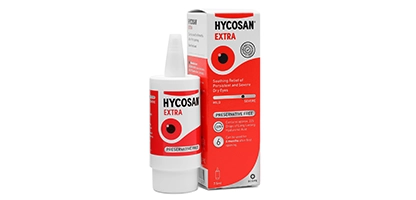
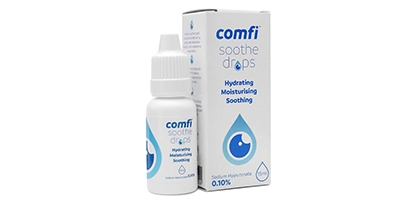
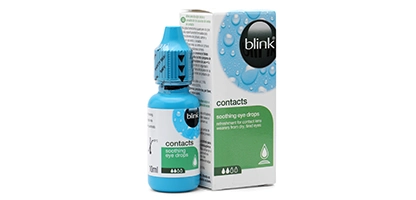
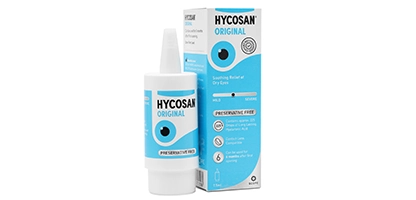
- Lubricating eye drops for comfort
It is important not to try to self-treat eye herpes with over-the-counter steroid drops or medication, as these can worsen the infection.
Can eye herpes affect vision?
Yes, repeated episodes of ocular herpes can damage the cornea and affect vision over time. Potential complications include:
- Corneal scarring
- Chronic dry eye
- Glaucoma
- Cataracts
- Retinal inflammation
- Permanent vision loss in severe cases
How to reduce the risk of flare-ups?
While there is no prevention or complete cure, some steps may help lower the risk of recurrence:
- Manage stress levels.
- Wear 100% UV-protective sunglasses outdoors.
- Avoid touching or rubbing the eyes.
- Wash your hands regularly.
- Follow prescribed antiviral treatment.
- Replace eye makeup after infections.
- Never share towels, cosmetics or contact lenses.
Early treatment can significantly reduce the risk of long-term complications. Make sure to seek urgent medical advice if you experience:
- Sudden vision changes
- Severe eye pain
- Increased redness
- Light sensitivity
- Eye swelling
- A rash around the eye
- Symptoms that worsen quickly
Frequently asked questions
1. Can eye herpes come back?
Yes. Ocular herpes can recur because the virus remains dormant in the body after the initial infection. Some people may experience repeated flare-ups over time.
2. How is eye herpes different from conjunctivitis?
Although both conditions can cause redness and watery eyes, eye herpes often involves pain, light sensitivity and corneal inflammation. Conjunctivitis is commonly caused by bacteria, viruses or allergies and does not usually cause corneal ulcers or scarring.
3. Can each eye be affected?
Yes, although ocular herpes more commonly affects one eye at a time. In some cases, both eyes may become involved.
4. Can you spread it to others?
The herpes simplex virus can spread through direct contact with infected skin or bodily fluids. Good hygiene, including hand washing and avoiding touching the eyes, can help reduce the risk of spreading the virus.
5. Can eye herpes be cured?
There is currently no permanent cure for ocular herpes, but antiviral treatments can control symptoms, shorten flare-ups and reduce complications.