Offers
 Account
 Menu
Menu Favourite
 Basket



 Need Optical Advice?












 Updated on:
12 February, 2026
Updated on:
12 February, 2026



 Copy Link



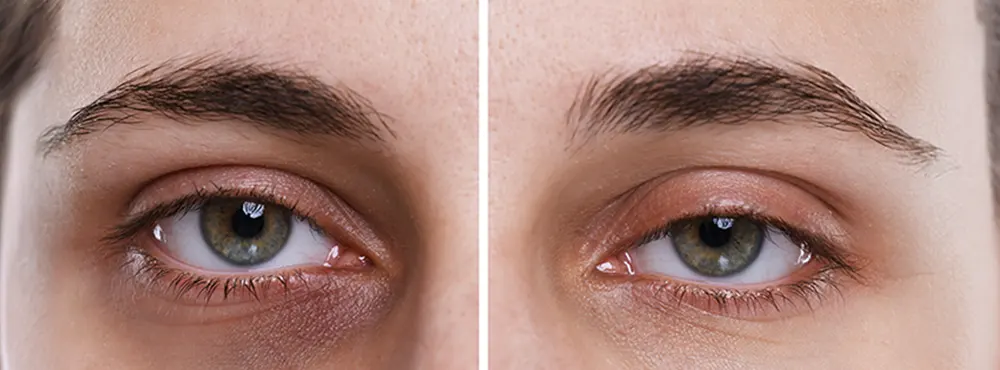
Is the skin around your eyes getting darker? Or are hollow-looking eyes giving your face a tired look? If so, you may be suffering from an eye condition called sunken eyes. It is a very common condition and affects people of all ages for many reasons. While ageing contributes to sunken eyes, other factors can also play a pivotal role. Read on to learn more about sunken eyes, including the factors that cause them, symptoms and how to prevent them.
What exactly are sunken eyes?
Sunken eyes are described as a condition in which the under-eye area becomes shadowy, dark or hollowed. Medically, the condition is known as ‘enophthalmos’. This can make a person look unwell, tired or aged even for someone who’s otherwise healthy.
What can cause sunken eyes?
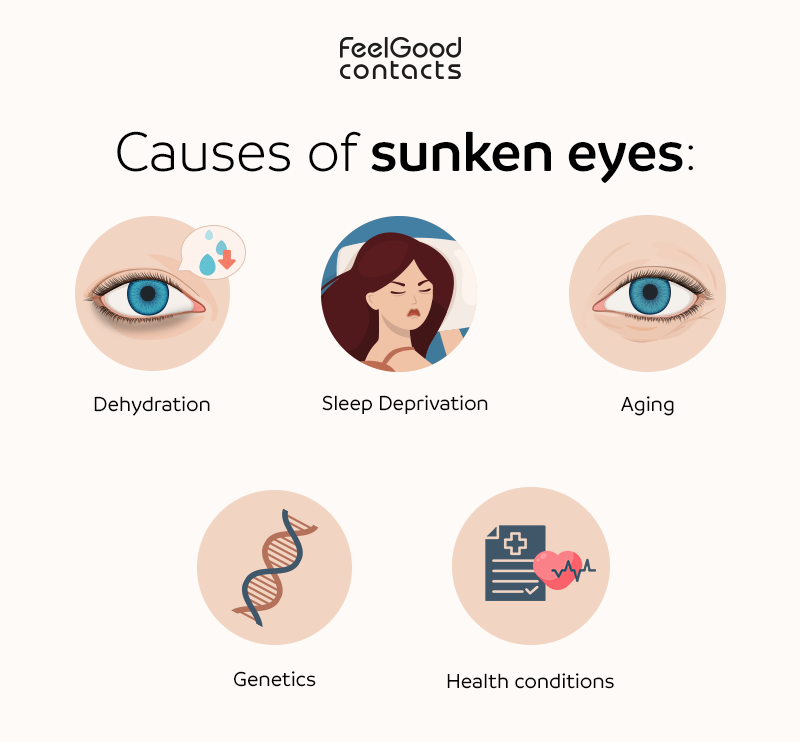
Although hollow eyes can be caused by the natural loss of collagen and skin suppleness, it can also occur due to some other factors, such as:
Dehydration
A lack of sufficient hydration in the body can cause sunken eyes. Common reasons could be vomiting, diarrhoea and not drinking enough water. When the body loses excessive fluid, the skin starts losing its flexibility, particularly around the under-eye area, making it look hollow.
Sleep deprivation
Eyes are the first organs that show the effects of poor sleep. Inadequate or improper sleep patterns can weaken the muscles around the eyes, causing puffiness and the appearance of dark circles, which can give the impression of sunken eyes.
Aging
With age, our body’s ability to produce collagen, which is responsible for making the skin firm and plump, declines. The loss of collagen weakens the eye muscles over time, making the area beneath it dark and hollow.
Genetics
Some people are born with thinner and darker skin under their eyes, which may be in their DNA. Parents who have darker skin beneath their lower eyelids are more likely to pass this condition to their children.
Health conditions
Certain health conditions can also make the under-eye area appear sunken, such as:
-
HIV infections:
The Human Immunodeficiency Virus (HIV), which causes AIDS (acquired immunodeficiency syndrome), attacks the body and triggers fat loss. The fat under the skin, including the face and other parts of the body, is significantly lost, giving the eyes a sunken appearance.
-
Severe allergies:
When the body goes through an allergic reaction, it releases histamines to resist the bacteria or germs causing them. These chemicals cause itchiness, puffiness and redness under the eyes, making them look darker.
-
Sinus infections:
Sinuses can cause sunken eyes, especially in Silent Sinus Syndrome (SSS), where chronic blockage shrinks and collapses the maxillary sinus – an air-filled passage, located beneath the eye and cheekbone. This causes the orbital floor of the eye socket to droop, making the eyes look sunken.
What are the symptoms of hollow eyes?
The most common symptoms include:
- Skin, above and under the eyes, appears thinner than the facial skin
- Darkened areas under and above the eyelids
- An unwell or tired look on the face, even after you rest well
Medical treatments for sunken eyes
There are several medical procedures to treat the appearance of hollow eyes. These include:
1. Dermal fillers
Made using hyaluronic acid, these fillers are injected into the sunken areas under the eyes to make the skin regain volume, reducing the sunken look. Since it’s a non-surgical procedure, it takes about 15 to 30 minutes to complete. However, it may cause swelling and bruising for some people around their eyes, which may last for a few days.
To stay on the safer side, our Dispensing Optician, Krina Halai recommends, “Those who decide to have a dermal filler procedure should always choose a well-trained, skilled and experienced practitioner to ensure optimum eye safety and prevention of eye injury.”
2. Laser treatment
While dermal filler makes the skin plump, laser treatment focuses on stimulating collagen surrounding the eyes, improving texture and tightening the under-eye area. It helps make the skin look less shadowy, smoother and firmer. While some people undergoing this treatment may need little or no recovery period, others may require a few days for complete recovery. However, a disadvantage of this procedure is that one needs to go through multiple sessions for visible results.
3. Radiofrequency (RF) microneedling
Compared to normal microneedling, which addresses skin texture under the eyes, RF microneedling induces heat and creates micro injuries, which penetrates radiofrequency energy in the deeper layer of the skin. This helps boost collagen production by stimulating the skin surrounding the eyes. This procedure yields better results over the period and it takes just one or two days for recovery. Once the session is over, people may feel pain, sweeling and redness under their eyes.
Lifestyle changes and home remedies to prevent hollow eyes
The following lifestyle changes and home remedies may help improve the appearance of hollowness around the eyes:
Drink plenty of water to stay hydrated
Dehydration, being a cause of sunken eyes, it is important to drink enough water. The NHS recommends adults to drink at least 6-8 glasses of water each day.
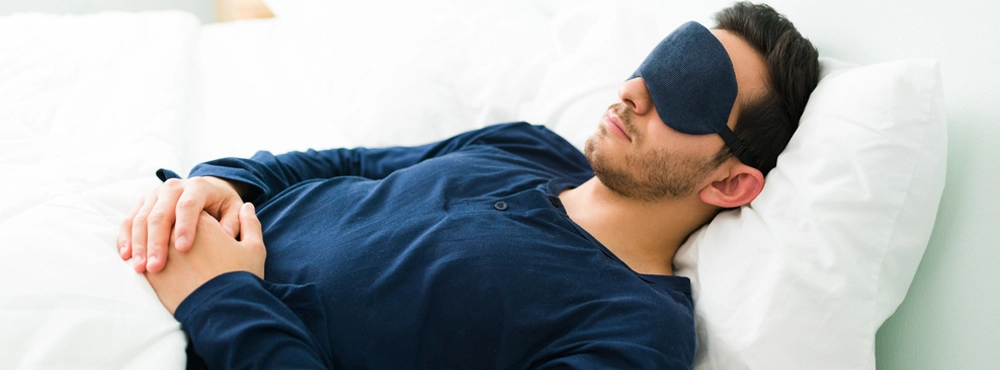
Rest and sleep well
When you lack quality sleep, it can leave you with tired and unhealthy eyes. Get at least 7 to 9 hours of sleep regularly, as it allows your body to heal itself. Sufficient amount of sleep makes the eyes look fresh and bright.
Eat a nutrient-rich diet
A balanced and nutrition-rich diet is essential for maintaining healthy skin and keeping your eyes healthy. Include foods rich in vitamin A, vitamin C and vitamin E to boost cell regeneration.
Avoid alcohol consumption and quit smoking
Excessive alcohol and smoking can make you look older and darken the skin around your eyes. However, cutting back on their consumption will significantly lower the chances of developing hollow eyes over the period.
Use moisturisers with SPF
Sun exposure can cause the collagen to break down, which worsens the under-eye hollows. However, applying a moisturiser with SPF or using a specialised eye cream helps prevent further pigmentation.
Sunken eyes can be caused by many factors, including lifestyle habits and the natural ageing process. In most cases, they can be improved by taking enough rest and staying hydrated. However, if they occur due to certain trauma or injury, it’s best to consult a healthcare provider.