Offers
 Account
 Menu
Menu Favourite
 Basket



 Need Optical Advice?












 Updated on:
26 February, 2026
Updated on:
26 February, 2026



 Copy Link



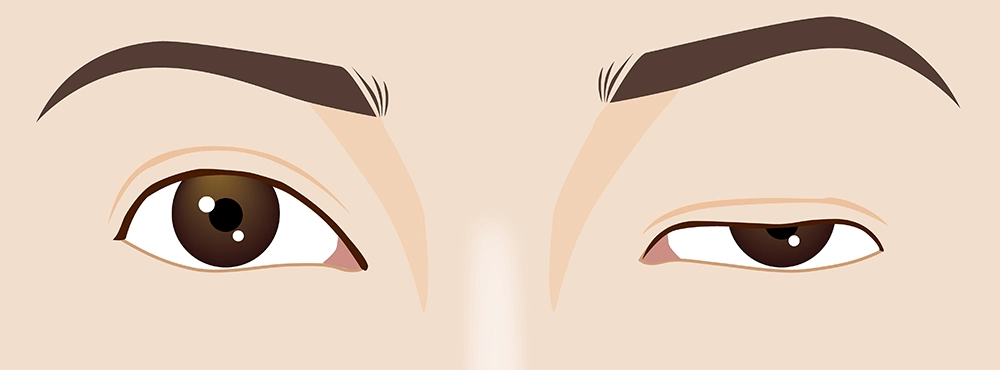
Ptosis, commonly known as drooping eyelid, is a condition where the upper eyelid sits lower than it should. This can affect one eye or both. The condition may be present at birth or develop later in life and can vary in severity from a mild droop to significant eyelid lowering. While ptosis is often noticeable, it doesn’t impact your vision. However, a drooping upper eyelid may obscure your view if it covers the pupil or can cause discomfort. Early detection is important as timely evaluation and treatment can help prevent visual complications and improve overall eye function.
Types of Ptosis
Ptosis can be classified primarily into two types: congenital and acquired.
Congenital ptosis
It is present at birth and results from developmental issues with the muscles responsible for lifting the eyelid. In many cases, it is caused by poor development of the levator muscle, which is crucial for eyelid elevation. Children with ptosis may also exhibit amblyopia (lazy eye), which requires early intervention to reduce the chances of long-term vision impairment.
Acquired ptosis
It develops later in life and can occur due to a variety of factors. It is often associated with the weakening or stretching of the eyelid muscles over time, particularly the levator muscle. Ageing is a common cause, but in some cases it can also result from nerve damage, muscle disorders, eye injuries or previous eye surgery. For some people, underlying medical conditions affecting the nerves or muscles may also be responsible for the condition. Treatment depends on the underlying cause and severity of the drooping.
Causes of Ptosis
The causes of this condition vary widely, including genetic, neurological, muscular and mechanical factors. For an effective treatment, it's important to identify the exact underlying cause. Some of the most common causes of Ptosis are:
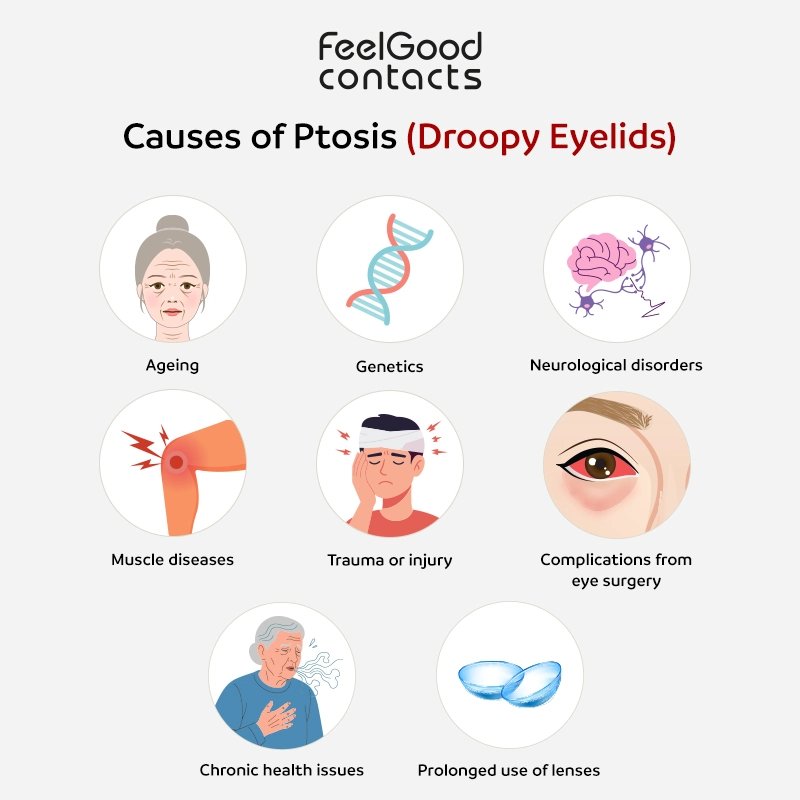
Ageing
As we age, our skin loses elasticity and muscles weaken, including those responsible for eyelid movement. The levator muscle and its connecting tissues may deteriorate, leading to aponeurotic ptosis, a common condition among the elderly.
Genetics
Some individuals are genetically predisposed to develop droopy eyelids. Congenital eyelid droop is often hereditary, with a family history increasing the likelihood of children inheriting this condition.
Neurological disorders
Nerve damage due to conditions like Horner's syndrome, tumour or third nerve palsy can disrupt communication between the brain and eyelid muscles, resulting in neurogenic ptosis.
Muscle diseases
Diseases affecting muscle function, such as myasthenia gravis, can lead to myogenic ptosis. These conditions impair muscle strength and responsiveness, resulting in eyelid droop.
Trauma or injury
Physical trauma or injury around the eye can disrupt the function of the eyelid muscles or nerves, leading to mechanical ptosis. Scarring, swelling or tumours can exert pressure on the eyelid, causing it to droop.
Other factors
Additional causes include complications from eye surgery, chronic health issues or prolonged use of contact lenses, which can strain eyelid muscles over time.
Symptoms of Ptosis
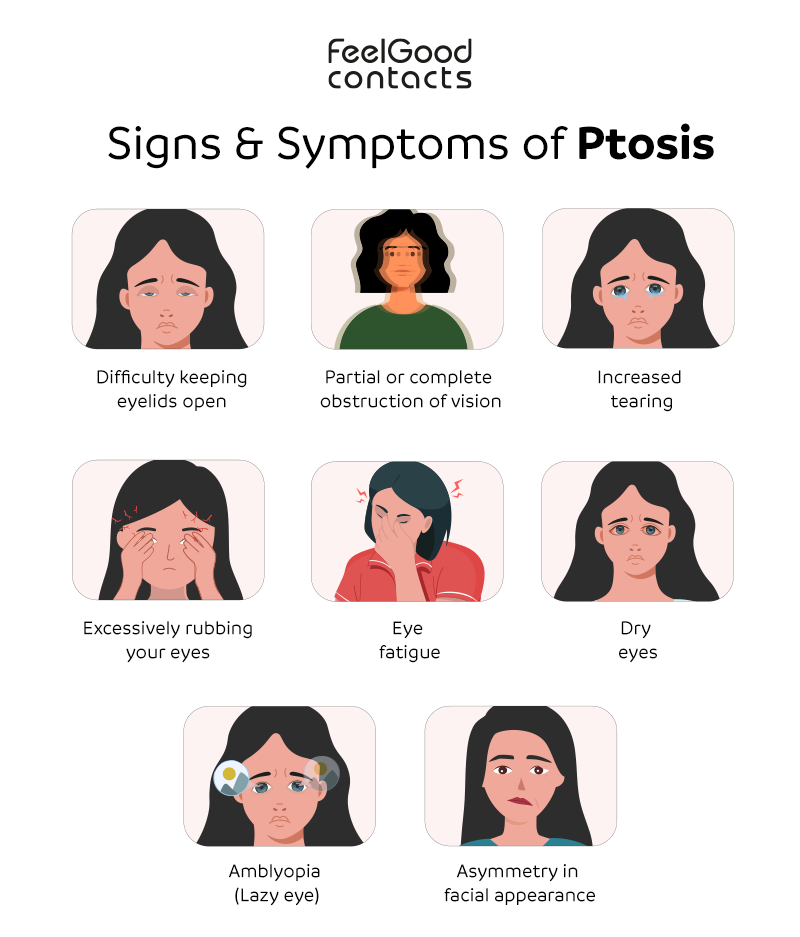
Recognising the symptoms is critical for early diagnosis and intervention. While the primary symptom is the noticeable drooping of one or both eyelids, there are other signs to watch for:
1. Difficulty keeping eyelids open:
People with this condition may find it tiring to keep their eyelids fully open, especially during long periods of reading or screen use. The eyelids may feel heavy and may worsen as the day progresses.
2. Partial or complete obstruction of vision:
In severe cases, a droopy eyelid can obstruct vision, particularly if the eyelid covers the pupil entirely. This can interfere with daily activities like reading, driving or watching television.
3. Increased tearing:
Excessive tearing may occur as the eye struggles to maintain adequate moisture due to incomplete closure.
4. Excessively rubbing your eyes:
Constant irritation, heaviness or discomfort caused by drooping eyelids can lead to frequent eye rubbing, which may further irritate the eyes and surrounding skin.
5. Eye fatigue:
Patients with this condition often experience eye fatigue as they often tilt their head back or raise their eyebrows to see more clearly. This constant effort can lead to headaches and strain.
6. Dry eyes:
Ptosis can interfere with normal blinking, leading to poor tear distribution. This may cause dry eyes, irritation or a gritty sensation in the eyes.
7. Amblyopia (Lazy eye):
Children born with congenital ptosis are at risk for amblyopia, where the brain favours one eye over the other, leading to poor vision development in the affected eye.
8. Asymmetry in facial appearance:
This condition can alter facial symmetry, as one eyelid droops noticeably lower than the other. This might affect social interactions and self-esteem.
Please Note: It's crucial to consult an ophthalmologist if any of these symptoms are present, as early detection can prevent complications and improve treatment outcomes.
Treatment of Ptosis
The treatment for droopy eyelids depends on the cause, severity and impact on daily life. Various treatment options are available, ranging from non-invasive methods to surgical intervention.
Non-surgical treatments
For mild cases or temporary eyelid drooping, the following non-surgical options may be sufficient:
- Eye exercises: Strengthening eye muscles through specific exercises or mechanical/electrical stimulation may help in mild cases, although efficacy varies.
- Glasses with crutches: Specially designed glasses can temporarily hold the eyelid in place, providing temporary relief for those with mild eyelid drooping.
- Eye drops: Eye drops can be prescribed to help in mild or temporary cases by gently stimulating the muscle that lifts the upper eyelid. The effect might be temporary and may last only for a few hours.
- Medication: In conditions such as myasthenia gravis, medication can improve muscle function and treat eyelid drooping.
Surgical treatments
Surgery is often recommended for moderate to severe cases of eyelid drooping, providing a more permanent solution. Surgical options include:
- Levator resection: This procedure involves tightening the levator muscle to lift the eyelid, offering a long-term improvement in eyelid position.
- Brow suspension: In cases of severe muscle weakness, a silicone rod or other material is used to connect the eyelid to the forehead muscle (frontalis), allowing for more effective lifting.
- Müller's muscle-conjunctival resection: This less invasive procedure targets Müller's muscle from inside the eyelid to remove part of it and bring it forward to strengthen it, providing a subtle lift for mild eyelid drooping.
Surgery success rates are higher, with most patients experiencing significant improvement in eyelid position and vision. However, post-surgical care is crucial for optimal recovery and includes following the surgeon's instructions regarding hygiene and avoiding strenuous activities.
Frequently Asked Questions
Q: Does mild ptosis need surgery?
A: Mild ptosis does not always require surgery and may be managed with non-surgical options such as eye drops or observation, depending on the cause and symptoms. It’s best to consult an ophthalmologist for treatment.
Q: At what age do people get ptosis?
A: It can occur at any age, as it may be present at birth or develop later in life due to ageing, medical conditions or injury.
Q: What happens if ptosis is untreated?
A: If left untreated, eyelid drooping may worsen over time and can interfere with vision, cause eye strain or lead to visual development issues in children.