Offers
 Account
 Menu
Menu Favourite
 Basket



 Need Optical Advice?










 Updated on:
23 July, 2026
Updated on:
23 July, 2026



 Copy Link




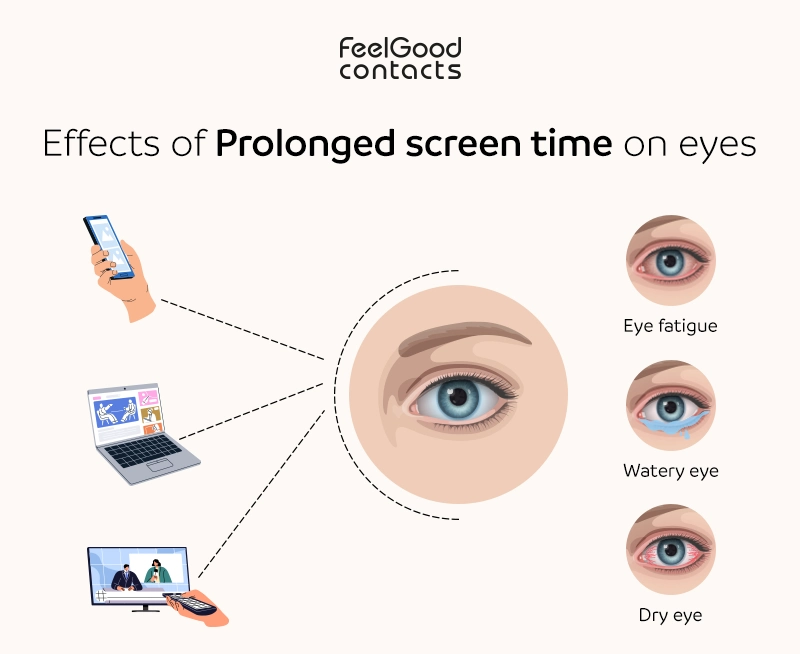
Are blue light glasses effective? This is a question asked by many, especially those who are on their computers, tablets and phones all day long. Prolonged time spent on digital screens can cause blurry vision, tired and dry eyes. There is no solid evidence yet to prove how blue light from digital screen affects the eyes or that blue light glasses really work against digital eye strain.
- What is blue light?
- How blue light affects the eyes
- What are blue light glasses?
- Do blue light glasses work?
- Myths and truths associated with blue light glasses
- How to find the ideal glasses with blue light coating for you
What is blue light?
Blue light is part of the visible light spectrum and has short wavelengths between 440 and 500 nanometres. It is also known as high-energy visible (HEV) light and primarily comes from the sun. It is also emitted from digital screens like laptops, computers and mobile phones.
How blue light affects the eyes
Longer the wave, less energy it transmits. As so, blue light being a shorter wavelength emits high energy waves and scatters easily. This is how blue light affects the eyes:
Blue light passes through the eyes and enters the retina (the layer at the back of the eyes). According to our Dispensing Optician, Wut Win, "People spending approximately 6-10 hours a day on digital devices are more likely to experience digital eye strain." This could make the eyes age easily, affecting the overall vision. Additionally, too much blue light exposure (from LED lights and digital screens) may cause sleeplessness, disturbing your sleep cycle (circadian rhythm).
On the contrary, the sun’s blue light in moderation can have a positive impact on your mood, alertness and sleep pattern.
What are blue light glasses?
To help minimise the effects of blue light, blue light glasses are usually advised. These are specifically designed lenses with a special coating that can help reduce the amount of blue light reaching the eyes.
You may explore:
Do blue light glasses work?
While glasses with blue light coating filter natural and artificial blue light reaching the eyes, there hasn’t been enough clinical evidence to verify that these lenses really reduce digital eye strain. Similarly, there is no concrete research to validate that blue light is the sole reason for digital eye strain. Now, if you’re speculating what do blue light glasses do then, they can help minimise the exposure, aiding in visual comfort.
Myths and truths associated with blue light glasses
Let’s find out the myths associated with blue light glasses and fact check them side by side.
Myth #1: Blue light glasses are for those with longer screen hours
The truth is…
People working under the LED lights or the sun can strain their eyes too. Blue light glasses offer enhanced visual comfort even when you use screens for a shorter period.
Myth #2: Blue light (high-energy wavelength) blocking glasses are just a ploy to persuade customers
The truth is…
They are not. Although it’s not clinically proven that blue light glasses reduce digital strain, people who uses them for screen noticed the visual comfort is better.
Myth #3: Blue rays blocking glasses are expensive
The truth is…
You don’t have to break your bank to get a pair of blue light glasses. While some branded glasses can be expensive, Feel Good Collection’s blue light lenses start from £29.00 and more, depending on your prescription. If you go for the standard spectacles, choose the ones especially built for digital or blue light protection.
How to find the ideal glasses with blue light coating for you
Follow these steps to get you your suitable frame:
Choose your frame style
Choosing the right glasses frames is essential to complement your face shape and upgrade your style. For instance, a rectangular frame is quite a versatile style to suit every face shape. Also, ensure you choose the right material, such as metal, acetate, plastic or any other for the needed structure and flexibility.
Ensure to select the right size
An ill-fitted pair of glasses can slip and slide off your face, the right frame size adds to the overall comfort. Glasses that fit perfectly also prevent the potential side effects like headaches.
Choose your lens coating
Even if you choose blue light or digital protection glasses, there will always be the possibility of accidental scratches, dust and smudges build up. Although such risks cannot be prevented entirely, you can minimise them by getting your lenses with a scratch-resistant and dust-free hydrophobic coating.