Offers
 Account
 Menu
Menu Favourite
 Basket



 Need Optical Advice?












 Updated on:
24 March, 2026
Updated on:
24 March, 2026


 Copy Link



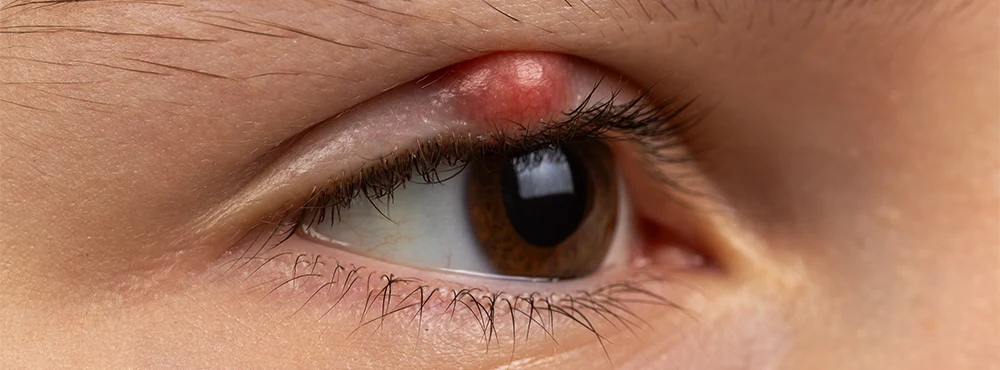
Does your upper eyelid look swollen? Or do you notice a bump on your eyelid? If so, you may have an eye condition called a chalazion. It is a painless lump that can appear on one or both eyes. Although a chalazion most often appears on the upper eyelid, it can also occur on the lower eyelid.
- What causes a chalazion?
- Chalazion vs stye
- Chalazion symptoms
- Chalazion treatment
- How to prevent chalazion
- Frequently asked questions
Read on to learn what causes a chalazion, how it can be prevented and when to seek medical advice.
What causes a chalazion?
Our Contact Lens Optician Tina Patel says, “A chalazion is usually caused by a blocked Meibomian gland. Meibomian glands are tiny oil glands found along the upper and lower eyelid margins. These glands produce oil, which mixes with your tears and forms an oily layer that keeps your eyes moist and prevents your tears from drying up. When the oil gland becomes blocked, the trapped oil builds up and forms an eyelid cyst.”
A chalazion can also be caused because of:
- Blepharitis (eyelid inflammation)
- Rosacea
- Seborrheic dermatitis
Chalazion vs stye
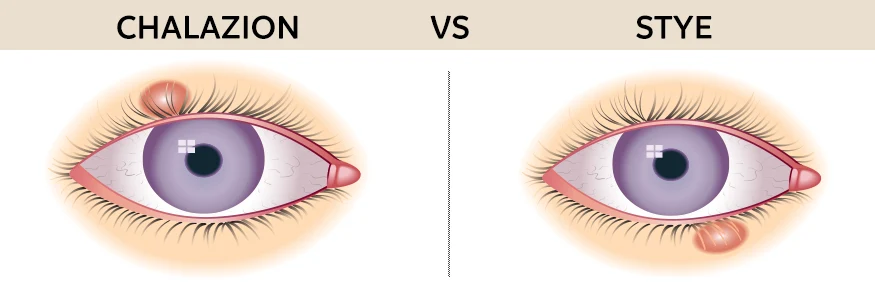
A chalazion is usually painless and develops when an oil gland in the eyelid becomes blocked and a stye is typically painful and caused by infection. Although they may appear to look similar, here are some key differences:
Chalazion |
Stye |
|
Occurs because of blocked oil glands |
Occurs because of an infection in the glands |
|
Usually appears deeper in the eyelid |
Usually appears along the lash line |
|
Firm lump, usually painless |
Looks like a pimple (red and tender) |
|
Can take weeks to heal |
Can heal in a few days or a week |
Chalazion symptoms
Most often, chalazia are painless, but they can become painful if they get infected. Common chalazion symptoms include:
- Eyelid cyst
- Mild eye irritation, causing watery eyes
- Swollen and red eyelids
- Blurred vision (if a large chalazion is pressing against the eyeball)
Chalazion treatment
While most chalazia disappear on their own within a few weeks, some may require medical treatment. An optician may recommend the following treatment options based on the underlying cause of the chalazion.
Drainage :
This process involves numbing the area and then making a small incision in the chalazion to drain out the built-up fluid.
Warm compress :
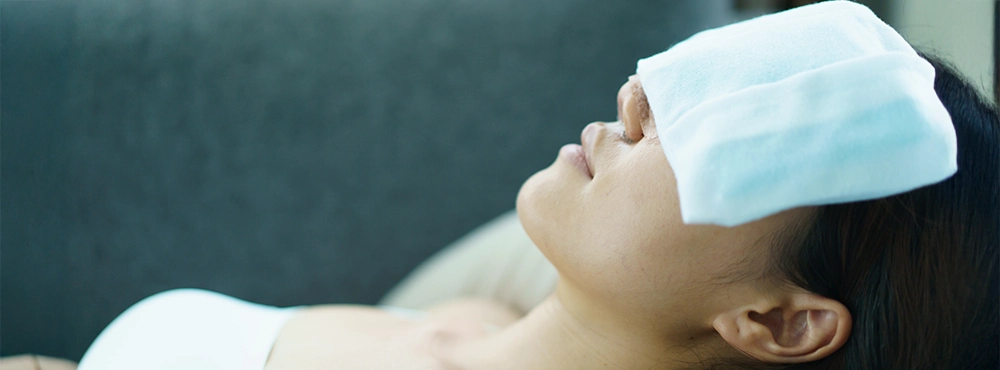
A warm compress is another treatment option for chalazion that can be carried out at home. Take a clean washcloth, soak it in warm water, squeeze and hold it on your eye for about 10-15 minutes, several times a day.
Good hygiene :
Use a mild eyelid cleanser to help keep the area clean and gently massage the area. Avoid touching or squeezing the chalazion. Avoid using eye makeup while the eyelid is inflamed.
How to prevent chalazion
Chalazion can be prevented by taking the following measures:
- Wash your hands before and after touching your eyes.
- Remove makeup before going to bed, as leaving it on the eyelid can block your oil glands.
- Replace your eye makeup, including eyeliner and mascara, every 3 to 6 months to reduce the risk of bacterial contamination.
- Clean your contact lenses with the contact lens solution recommended by your optician.
- Avoid wearing your contact lenses for more than the recommended hours by your optician.
- Practise good eyelid hygiene by gently cleansing your eyelids regularly.
Frequently asked questions
Is chalazion contagious?
No, a chalazion is not contagious.
Will chalazion heal on its own?
In most cases, a chalazion will heal on its own. However, this can take several weeks.
When to see a doctor after developing a chalazion?
According to the NHS, most eyelid problems, including chalazion, are harmless. However, you should consult your optician or GP if your chalazion doesn’t improve after a few weeks of practising good eyelid hygiene and warm compresses.
Can a chalazion be popped?
No, a chalazion should never be popped or squeezed as it can worsen the inflammation and increase the risk of infection.