Offers
 Account
 Menu
Menu Favourite
 Basket



 Need Optical Advice?












 Updated on:
14 July, 2026
Updated on:
14 July, 2026



 Copy Link



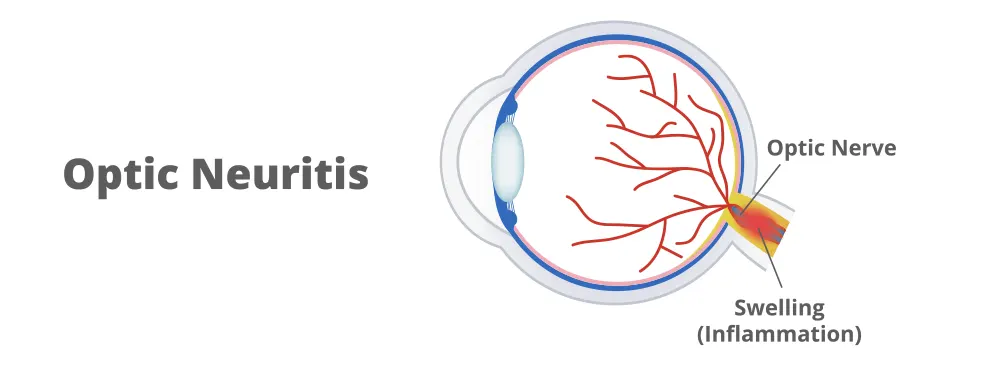
Optic neuritis is a condition that affects the optic nerve, which carries messages from the eyes to the brain. The optic nerve has a protective covering called myelin that helps signals travel smoothly between the eyes and the brain. In optic neuritis, the myelin becomes damaged, making it harder for the nerve to work properly. The condition often develops quickly over a few days, causing symptoms such as blurred or dim vision, reduced colour vision, blind spots, and pain when moving the eye. While these symptoms can feel frightening, most people recover good vision, though some may have lasting visual symptoms.
- Types of optic neuritis
- Symptoms of optic neuritis
- Causes of optic neuritis
- Diagnosis of optic neuritis
- Treatment for optic neuritis
- Who is at more risk of developing optic neuritis?
Types of optic neuritis
Optic neuritis can be grouped into different types, depending on how it affects the eyes and how the body responds to it.
1. Typical optic neuritis
This is the most common form that usually affects one eye only. It often gets better over time with or without treatment, although medical care is still important to check for any underlying conditions.
2. Atypical optic neuritis
This type is less common and may affect both eyes. Symptoms can be more severe and last longer. It is often linked to neurological or autoimmune disorders, which may require further investigation and specialised treatment.
3. Paediatric optic neuritis
This form occurs in children, may develop following an infection or illness. While it can appear worrying at first, children often show good recovery with appropriate treatment and monitoring.
Symptoms of optic neuritis
Optic neuritis symptoms can vary from person to person. Some people experience only mild vision problems, while others notice major changes in their eyesight. Common symptoms include:
- Pain in and around the eye that worsens with eye movement
- Dyschromatopsia (Colours appearing faded or less bright)
- Blurred or cloudy vision
- Some may notice flashing or flickering lights
- Vision appearing dimmer than usual
- Partial loss of vision
In most cases, only one eye is affected but sometimes it can affect both. The symptoms usually worsen for several days before slowly starting to improve.
Causes of optic neuritis
Optic neuritis is usually linked to inflammation caused by the immune system when it mistakenly attacks the optic nerve. Although doctors cannot identify an exact cause sometimes, this may happen because of several reasons like:
1. Multiple sclerosis
Optic neuritis is commonly linked to multiple sclerosis, often called MS, a condition that affects the brain and spinal cord. Some people who develop optic neuritis may later be diagnosed with MS, although not everyone with optic neuritis develops the condition.
2. Infections
Some infections may trigger inflammation in the optic nerve, including:
- Viral infections
- Lyme disease
- Measles
- Mumps
3. Autoimmune conditions
Certain diseases that cause inflammation throughout the body can also increase the risk.
These include:
- Lupus
- Sarcoidosis
- Neuromyelitis optica
Diagnosis of optic neuritis
Doctors diagnose optic neuritis using eye examinations and medical tests, such as:
1. Eye tests
An eye specialist may check:
- Vision sharpness
- Ability to see colours clearly
- Eye movements
- Reactions of the pupils to light
2. MRI scan
An MRI (magnetic resonance imaging) scan produces detailed images of the brain and optic nerve. This helps doctors look for inflammation and signs of conditions such as MS.
3. Blood tests
Blood tests may be used to check for infections or immune system conditions.
4. Optical coherence tomography
This scan, often called OCT, uses light waves to create detailed images of the retina and can help detect changes associated with optic nerve damage.
Treatment for optic neuritis
Optic neuritis treatment depends on the cause and severity of symptoms. Common treatments include:
1. Steroids
Steroid medicines are commonly used to reduce inflammation in the optic nerve and may help vision recover more quickly. They are often recommended for people with moderate to severe symptoms and can be given through an IV or as oral tablets. The exact treatment plan will depend on the underlying cause and the individual's response to treatment.
2. Treating underlying conditions
If optic neuritis is linked to another illness, doctors may recommend additional treatment, such as:
- Antibiotics for bacterial infections
- Plasma exchange (PLEX) to control auto immune diseases, such as NMO or MOGAD to help remove harmful immune proteins from the blood and reduce immune system activity
- Specialist treatment for MS
Optic neuritis treatment aims to calm inflammation in the optic nerve and protect eyesight. The treatment can vary from person-to-person depending on the underlying cause and test results. The healthcare team will recommend the most suitable treatment plan and explain possible side effects or risks.
Tina Patel, contact lens optician at Feel Good Contacts says, “Any sudden change in your vision should be assessed by an eye care professional as soon as possible. Early diagnosis of optic neuritis can help guide treatment and identify any underlying conditions that may require further investigation.”
Who’s at a higher risk of developing optic neuritis?
Optic neuritis can affect anyone, but it is more common in adults between the age of 20 and 45. Women are affected more often than men. People living with certain autoimmune diseases or inflammatory conditions, such as multiple sclerosis, may also have a higher risk. Children can also develop optic neuritis, although this is less common.
Optic neuritis is not just an eye condition and can sometimes be linked to immune or neurological disorders. That’s why it’s important to have a proper medical assessment, even if symptoms start to improve. With prompt treatment and follow-up, most people regain good vision and return to their everyday routines.